Assessment
So far this track has looked at the evidence behind a single result. Part 1 showed that a scorecard is not evidence on its own. Part 2 asked whether two examiners would mark the same script the same way. Part 3 followed the paper trail behind one result. Part 4 tested what breaks at the scale of ten thousand screens. Part 5 asked what an institution can promise when someone wants to know how a result was reached.
Assessment
The first four parts of this track were about getting hiring right. The Interview Illusion took apart gut-feel interviewing. Skills, Not Résumés questioned the document most screening still starts from. The One-Score Fallacy showed why a single test result can't carry a hiring decision. Who Approves the AI's Verdict? asked who is accountable once AI is part of the process.
Assessment
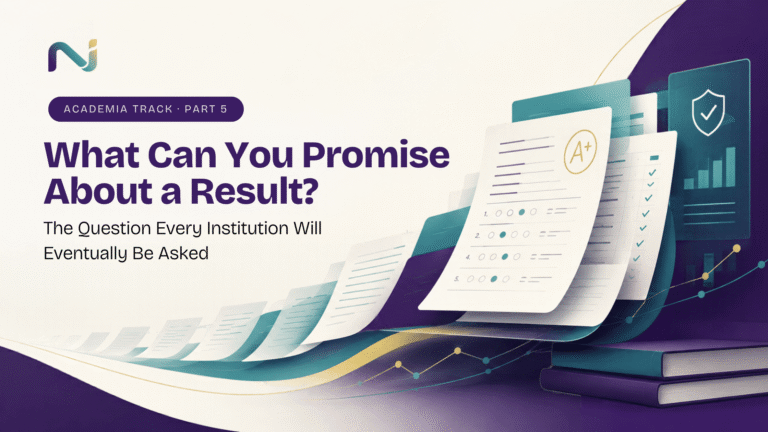
So far this track has worked through the parts of assessment that institutions usually trust without checking. Part 1 showed that a scorecard is not evidence on its own. Part 2 looked at whether two examiners would mark the same script the same way. Part 3 followed the paper trail behind a single result. Part 4 asked what breaks when one exam runs on ten thousand screens at once.
Part 5 asks the question all of that leads to. A parent writes in, a student appeals, or a lawyer sends a letter. Each wants to know how this particular result was reached. What can the institution actually promise them?
Assessment
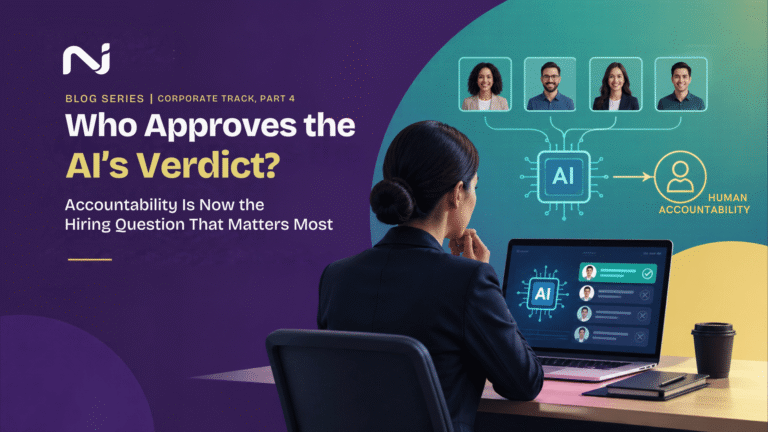
Parts 1 through 3 of this series covered the interview, the résumé, and the single test score — three familiar weak links in hiring. This one is about something newer: a growing number of hiring decisions now have an AI system somewhere in the chain, scoring a candidate, ranking a shortlist, or recommending a reject. The question that actually matters isn't whether AI should be involved. It's who is accountable when it is — and regulators in multiple jurisdictions have started answering that question whether employers have caught up or not.
Assessment
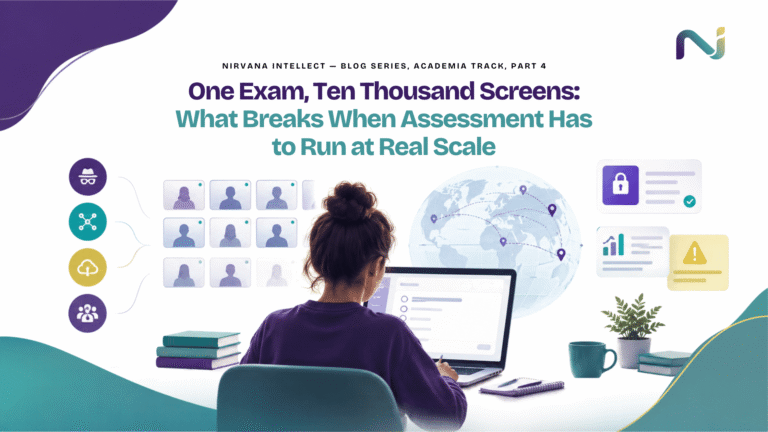
Parts 1 through 3 of this series looked at scoring, marker consistency, and the paper trail behind a single result. This one is about what happens to all of that once you multiply it by ten thousand candidates sitting the same exam, at the same time, often from ten thousand different locations. Scale doesn't just make the existing problems bigger - it introduces a new category of failure that a small, in-person sitting never has to face: malpractice at industrial scale, and infrastructure that has to hold under genuine concurrent load.
Assessment
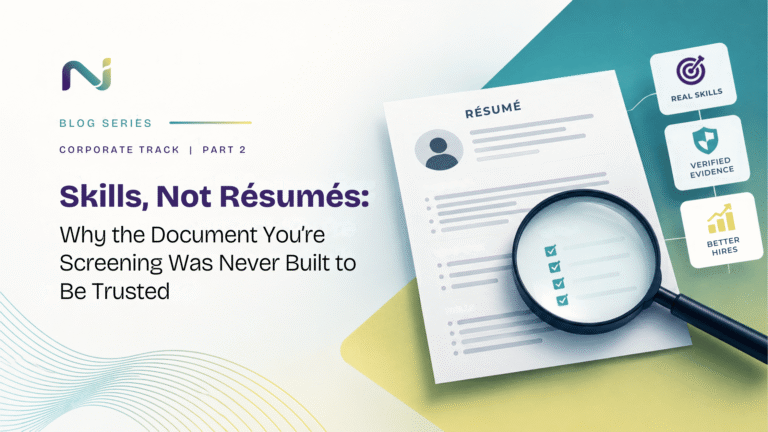
Part 1 of this series looked at why the interview itself is a weak predictor of job performance. This one goes back a step further, to the document that decides who gets an interview in the first place. A résumé is a candidate's own summary of their own career, written by someone whose entire incentive is to make it as compelling as possible. Treating that as a factual record was always a stretch. The data on how often it actually holds up is worse than most hiring teams assume.
Assessment
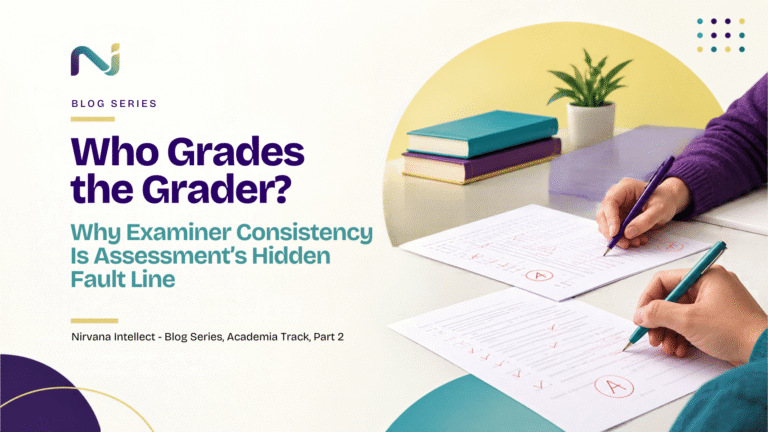
Part 1 of this series looked at why a score alone isn't evidence. This one goes a layer deeper: even when an institution has a rubric, a trained examiner, and a proper marking process, there's still no guarantee that two qualified people looking at the same answer will land on the same mark. If the person doing the grading isn't consistent — with themselves, and with every other examiner on the panel — the rubric underneath them barely matters.
Assessment
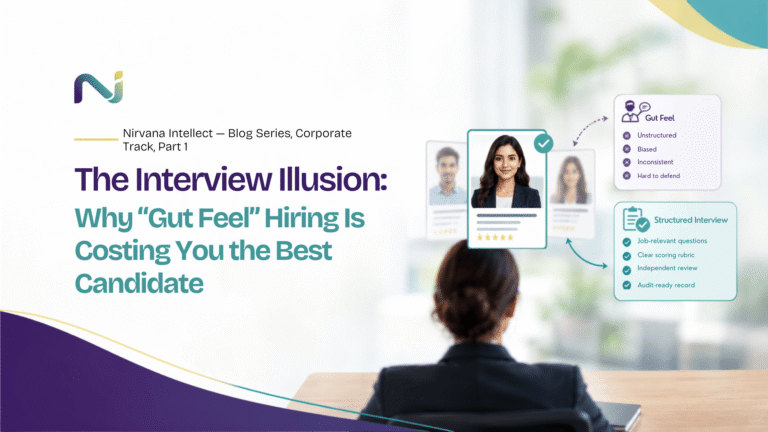
Most hiring managers can describe, in detail, the moment they knew a candidate was “the one.” A confident answer. A likeable tone. A feeling that clicked around minute four of the conversation. What they usually can't describe is why that feeling turned out to be wrong roughly half the time.
Assessment
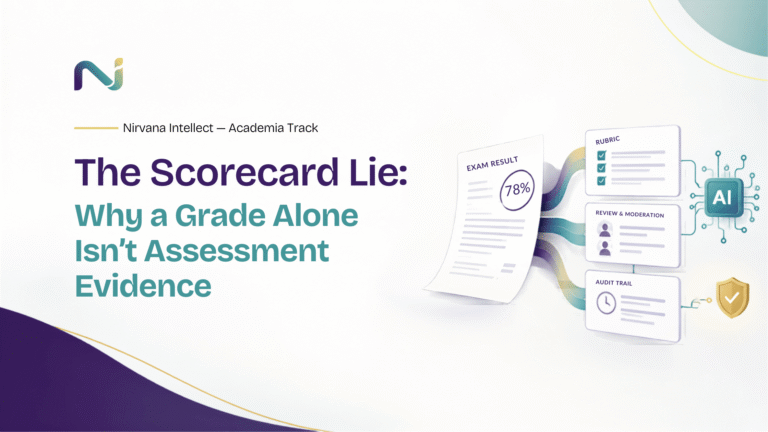
A student gets 78%. Another gets 79%. On paper, the second student did marginally better. In reality, neither number tells you what either student actually understands, how the answer was reached, or whether the same question graded by a different examiner would have produced the same mark at all.
Assessment governance
An audit trail is useful only when it reconnects the decision to the right version, evidence, reviewer actions and publication history without detective work.
Capability intelligence
A practical model for deciding when old scores remain useful, when a lighter refresh is enough and when the decision needs new evidence.
Talent assessment
Moving beyond degree filters only works when role requirements, work samples, scoring and candidate opportunity are designed as one evidence system.
Talent assessment
A practical way to examine job relevance, subgroup outcomes, accommodations and vendor claims before an efficient selection tool creates unfair barriers.
Candidate experience
How to decide what monitoring is genuinely necessary, explain it clearly, provide alternatives and keep automated flags from becoming findings.
Academic assessment
A humane, practical approach to authentic assessment that values process, judgement and dialogue instead of escalating detection and monitoring.
Candidate experience
How to remove avoidable barriers from timed assessments, authentication, complex controls and recovery flows while protecting what the assessment is meant to measure.
Responsible AI
Human oversight fails when reviewers are unprepared, overloaded or unable to challenge the system. Here is a role-based literacy programme built around real decisions.
Responsible AI
A practical readiness plan for teams using AI in high-consequence employment or education workflows, without turning compliance into a last-minute paperwork exercise.
Responsible AI
How to use AI for drafting, triage and feedback while keeping evidence, review and authority visible.
Assessment design
A practical framework for moving from a single result to evidence that people can question, compare and act on.