
Intelligence
Context travels with every insight.
Performance, psychometric and observed capability evidence read together — each keeping its own source, strength, population and date.
Evidence
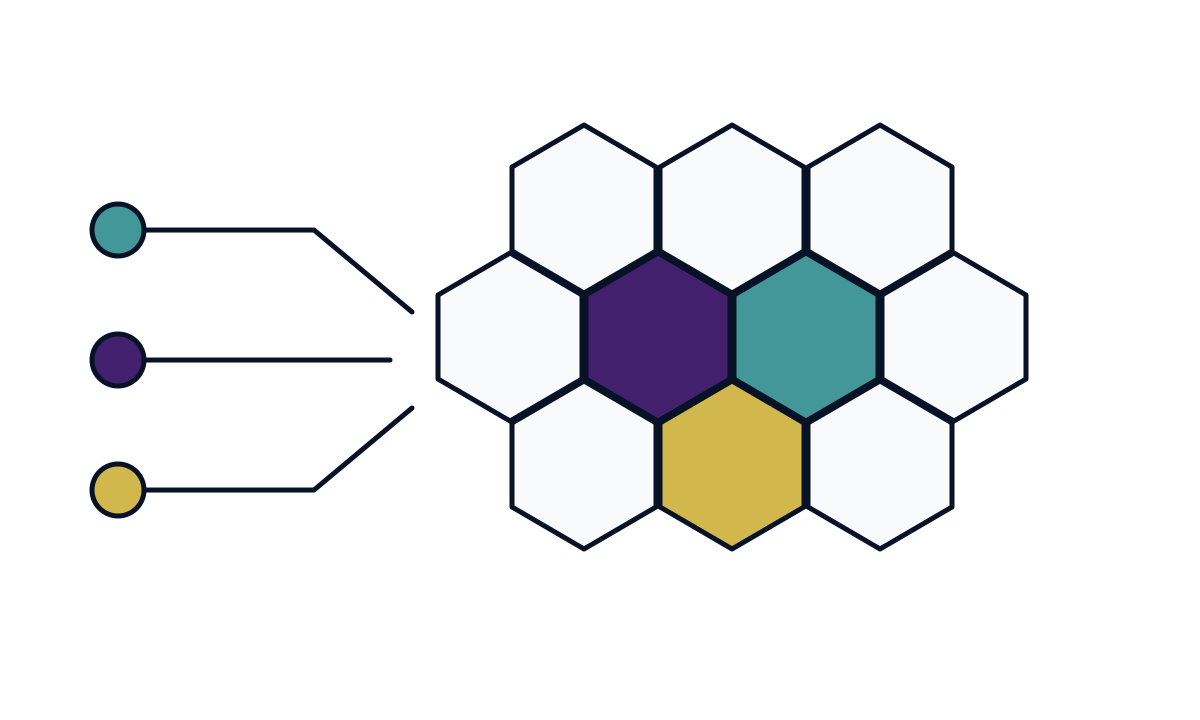
Three kinds of evidence. One honest view.
Performance, psychometrics and observed capability are read together — and each keeps its own source, strength and date.
Illustrative view with fictional values. Evidence thresholds are review criteria, not psychometric validation or confidence scores.
Add knowledgeRubrics and approved guidance
Connect evidenceAssessment and capability data
Request evidence review
Explore review workflowActive evidence thresholds
Critical reasoningPerformance evidence · governed threshold
88%
Adaptive learningPsychometric evidence · governed threshold
72%
Applied judgementCapability evidence · governed threshold
81%

Critical reasoning
Assess higher-order thinking against explicit, reviewable criteria.
88Illustrative evidence strength
Fictional example
Fictional example

Adaptive learning
Use performance signals to identify the most relevant next development step.
- Adaptive learning
- Skills gap detection
- Reviewed development priorities

Applied judgement
Evaluate situational decisions through role-shaped scenarios and rubrics.
- Scenario-based assessment
- Situational judgement
- Role-specific benchmarks
Three kinds of evidence, read together
A single score answers very little. Nirvana Intellect reads performance evidence, validated psychometric instruments and observed capability side by side, and keeps each one distinct: where it came from, how strong it is, which population it was compared against, and when it was published.
There is no hidden composite and no invented certainty. Where evidence is thin, the profile says so rather than filling the gap with an average.
From result to decision
Capability views roll up to teams, cohorts and roles, surfacing skill gaps and the interventions that would close them. Because every value keeps its lineage, an insight can be traced back to the responses that produced it — months later, in front of an auditor or an unhappy candidate.
Ready when you are
Bring your evidence into view.
See how Nirvana Intellect can fit your assessment, capability and governance landscape.
Book a demo View sample report
